For years, the tech industry followed a simple formula: add more features, build larger systems, and create platforms that try to do everything at once. But in 2026, user behavior is changing rapidly.
People now expect software to be fast, clean, and effortless.
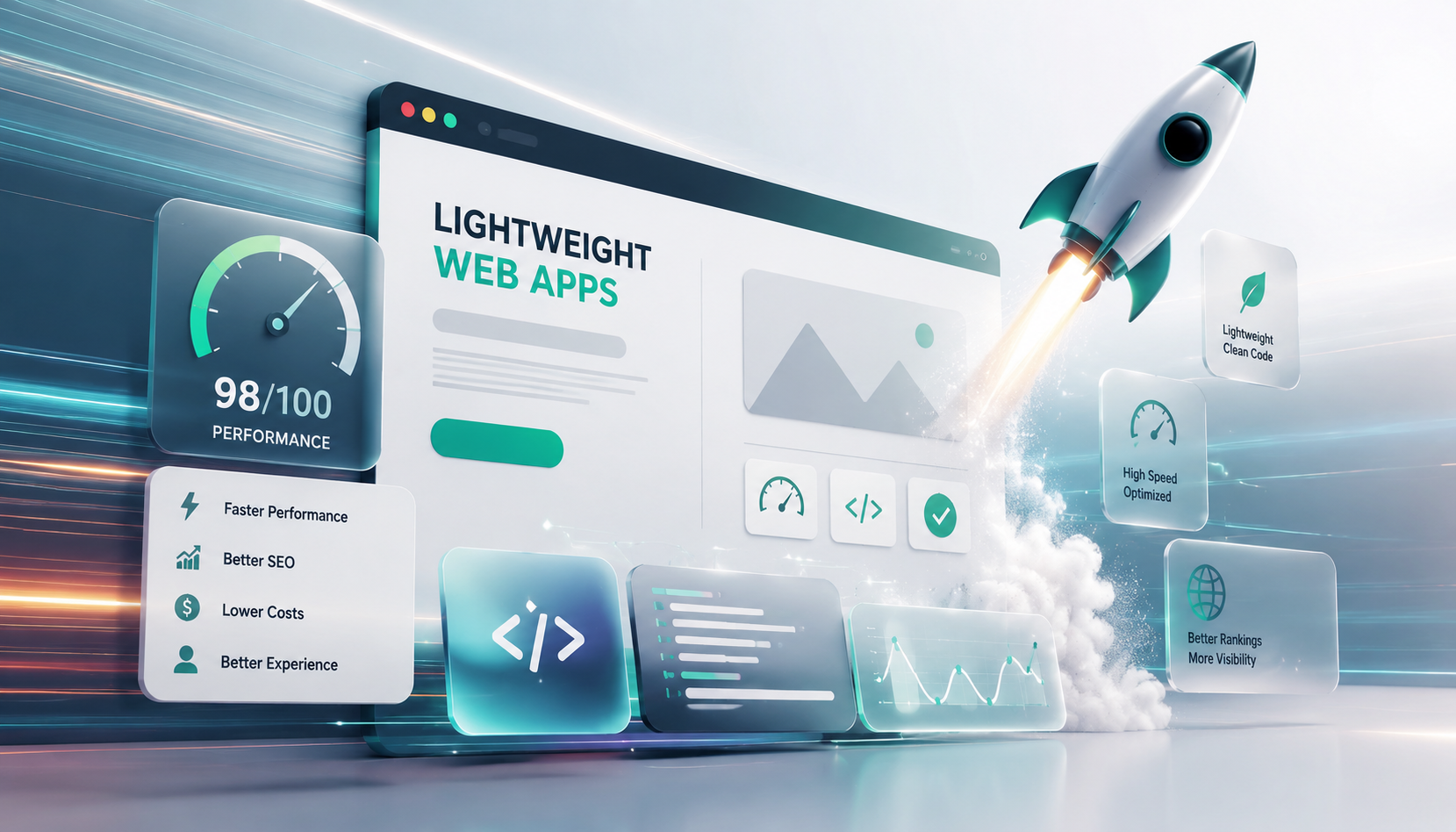
This shift has created a major rise in lightweight web applications. Instead of building oversized platforms packed with complexity, modern developers are focusing on lean digital products that solve specific problems efficiently.
Performance has become one of the biggest competitive advantages online.
Users today abandon slow websites within seconds. Mobile-first browsing, limited attention spans, and increasing expectations around user experience mean that every extra second of loading time directly impacts engagement and conversions.
That is why lightweight web apps are becoming more valuable than ever.
Modern frameworks like Next.js, Laravel, Astro, and server-driven architectures are helping developers build systems that feel faster, smoother, and more responsive without sacrificing functionality. Businesses are now prioritizing optimized experiences over excessive feature lists.
This trend is especially visible in SaaS platforms and startup products.
Instead of overwhelming users with dozens of complicated dashboards and settings, successful products are simplifying workflows. The goal is no longer to make software âfeature-rich.â The goal is to make it frictionless.
Minimalism is becoming a business strategy.
A lightweight application usually offers several major advantages:
- Faster loading speeds
- Better mobile performance
- Improved SEO rankings
- Lower hosting costs
- Easier scalability
- Cleaner user experience
- Higher user retention
- Reduced maintenance complexity
This approach also benefits developers themselves.
Smaller systems are easier to maintain, debug, and scale over time. Teams can move faster, release updates more frequently, and avoid the technical debt that often destroys large projects internally.
Another important factor is energy efficiency.
As sustainability becomes more important in technology, optimized applications consume fewer server resources and require less computational power. Efficient systems are no longer just technically better â they are economically smarter as well.
UI and UX trends are evolving alongside this movement.
Modern interfaces now focus heavily on spacing, readability, micro-interactions, smooth navigation, and visual clarity. Instead of flashy animations everywhere, designers are creating calmer and more intentional experiences that help users focus on tasks quickly.
AI is also influencing lightweight development.
Developers are increasingly using AI to automate repetitive backend processes, content generation, optimization, and analytics. This allows products to stay simple on the front-end while still delivering powerful intelligent features behind the scenes.
The future of software is not about building the biggest platform anymore.
It is about building the smartest experience.
The companies and developers that understand speed, simplicity, usability, and focused execution are the ones shaping the next generation of digital products.
Share this article
Copy the article link and send it to anyone who may find it useful.