For years, automation in business mostly meant simple workflows and repetitive scripts. Companies used tools that could send emails, organize spreadsheets, or trigger notifications based on specific conditions.
But in 2026, automation is evolving into something much more advanced.
AI agents are now becoming digital workers capable of handling complex tasks with minimal human involvement. These systems are not just following instructions anymore â they are making decisions, understanding context, learning workflows, and interacting with multiple platforms intelligently.
This shift is changing how modern businesses operate.
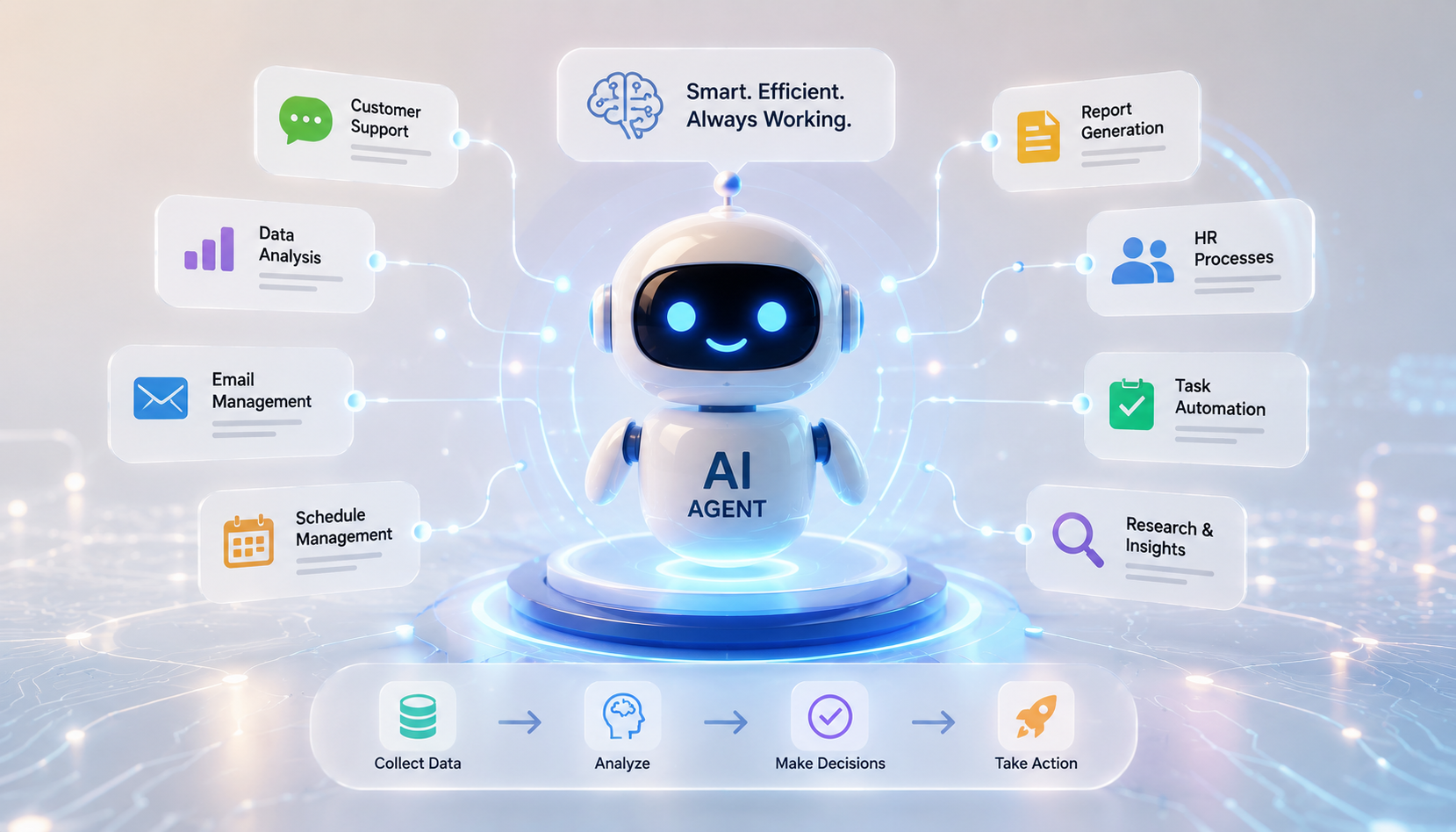
An AI agent can now manage customer conversations, summarize meetings, monitor analytics, generate reports, organize data, respond to support tickets, optimize schedules, and even coordinate between different software systems automatically.
The biggest advantage is speed.
Businesses today deal with massive amounts of information every day. Human teams often spend hours on repetitive operational tasks that slow down productivity. AI agents remove this bottleneck by handling routine processes instantly and continuously.
This allows companies to focus more on strategy, creativity, and growth.
One major area where AI agents are becoming extremely popular is customer support. Instead of traditional chatbots with robotic responses, modern AI systems can now understand natural language, maintain conversation context, and provide intelligent solutions in real time.
The experience feels far more human and efficient.
AI agents are also transforming internal business operations.
Teams are using AI-powered systems for:
- Lead qualification
- Content workflows
- CRM management
- Financial reporting
- Social media automation
- Technical monitoring
- HR processes
- Data organization
- Project management
- Workflow optimization
Another important trend is AI collaboration between tools.
Modern AI agents can connect with cloud systems, APIs, SaaS platforms, and databases simultaneously. This creates automated ecosystems where information moves smoothly across different services without manual intervention.
For startups and small businesses, this technology is creating huge opportunities.
Companies no longer need massive operational teams to scale efficiently. Small teams can now achieve enterprise-level productivity by integrating intelligent AI systems into their daily workflows.
However, businesses still need balance.
AI works best when combined with human oversight, creativity, and decision-making. The goal is not to replace people completely. The goal is to remove repetitive friction so teams can focus on higher-value work.
Design trends around AI products are also evolving rapidly.
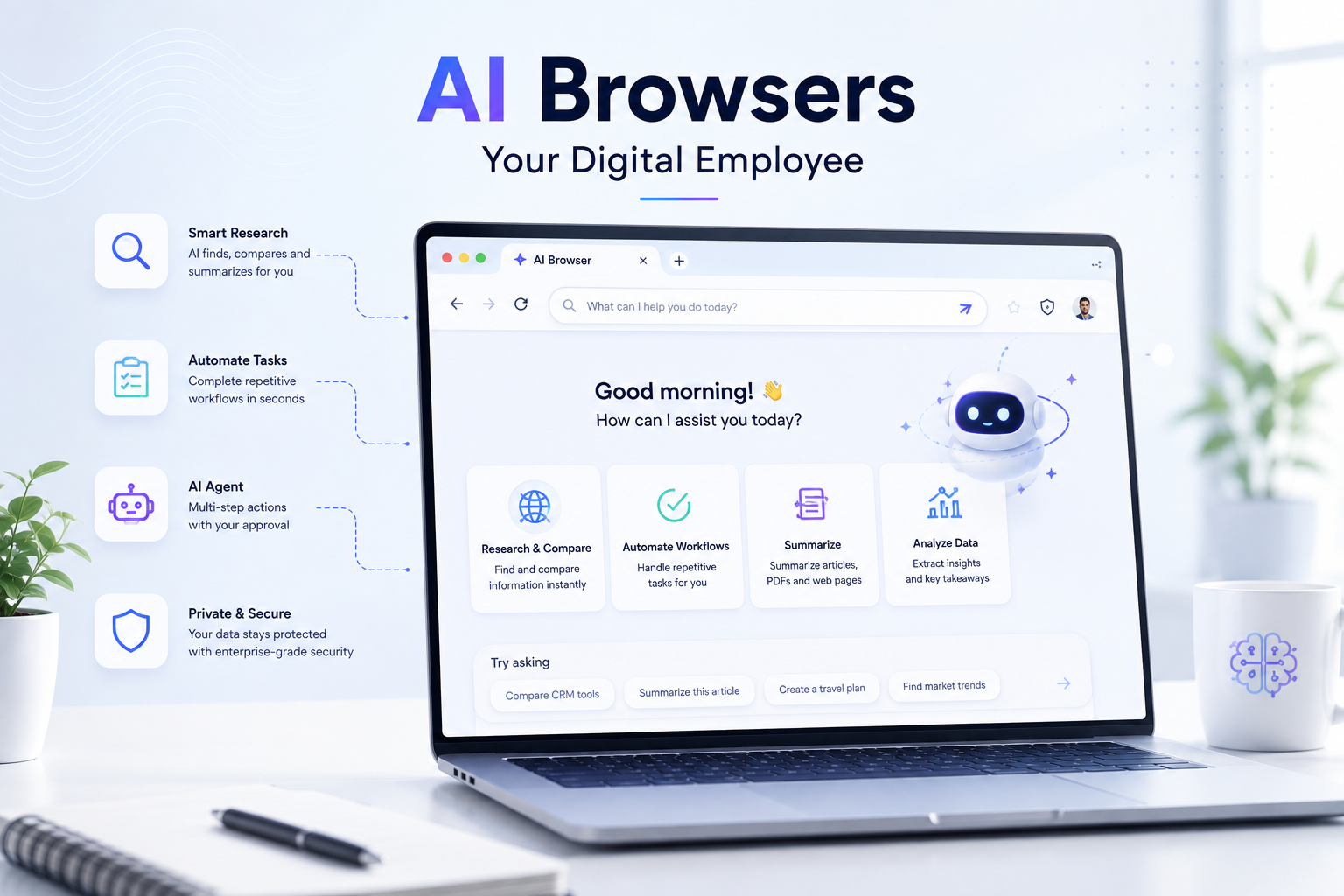
Users now expect AI tools to feel clean, simple, and transparent instead of overly technical. Minimal dashboards, conversational interfaces, real-time feedback, and smooth workflows are becoming standard in modern AI products.
The rise of AI agents is not just another tech trend.
It is becoming a new operational layer for digital businesses.
Companies that adopt intelligent automation early are positioning themselves for faster growth, lower operational costs, and significantly improved efficiency in the years ahead.
Share this article
Copy the article link and send it to anyone who may find it useful.